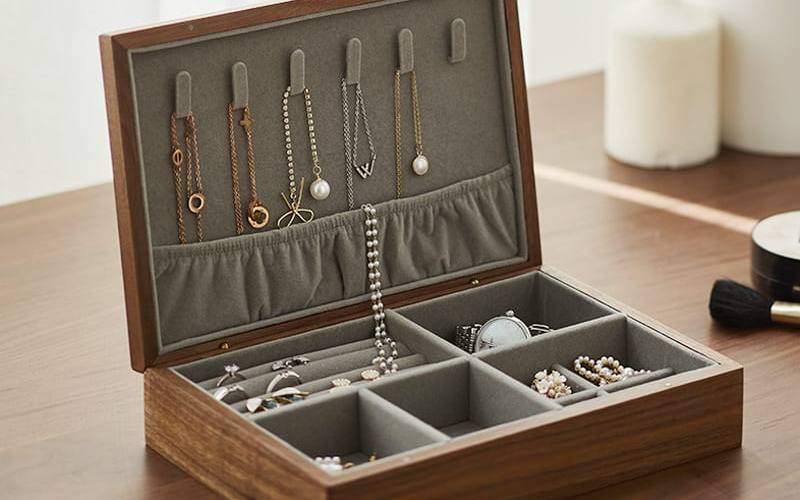
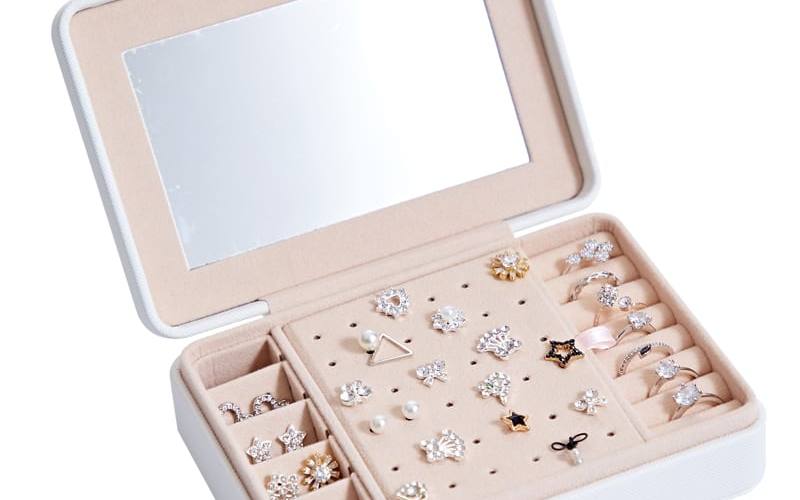
Care
How to clean a jewellery box lining
Clean a velvet or microfibre jewellery box lining step by step: dust, crumbs, make-up marks and musty smells, plus PU leather, wood and glass outsides.
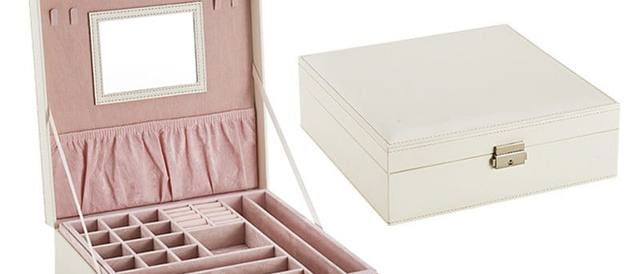
A jewellery box collects more than jewellery. Dust settles into the corners of every compartment, powder and foundation rub off onto ring rolls, and the odd crumb or hair finds its way in. Velvet and microfibre linings hold onto all of it. The good news is that most linings clean up well with things you already have at home, as long as you go easy on water. This guide takes you through a full clean, from emptying the box to drying it, and covers the outside of the box too.
Before you start
Gather a few simple things:
- a lint roller, or wide sticky tape such as parcel tape
- a soft, clean brush: a make-up brush or a soft paintbrush is ideal
- two or three soft, lint-free cloths
- a small bowl of lukewarm water with one drop of mild washing-up liquid
- a vacuum cleaner with a brush attachment (optional)
- a cotton bud or two for tight corners
Work on a clean towel on a table, in good light. Everything you need to do is gentle, so there is no need for strong cleaners, solvents or bleach. They can discolour fabric and leave a smell that transfers to your jewellery.
Step 1: Empty the box and sort as you go
Take every piece out and lay it on the towel. Check the corners of each compartment, behind ring rolls and under any removable trays: earring backs and small charms often hide there. If the box has removable trays or ring rolls, take them out too, as they are easier to clean on their own.
This is also a good moment to look at your jewellery. Pieces that have tarnished, loose stones or broken clasps are easier to spot when everything is laid out. Our guide on how to store jewellery explains how to slow tarnish down once everything goes back.
Step 2: Lift the dust off dry
Always start dry. Water turns dust into a paste that sinks into the pile of the fabric.
- Tip the box upside down over a bin and tap the back gently to drop out loose crumbs and dust.
- Roll the lining with a lint roller. For narrow compartments, wrap sticky tape around two fingers, sticky side out, and press it into the corners.
- Brush the pile with a soft brush, always in the same direction. On velvet, brushing one way lifts the fibres back up and makes them look even again.
- Vacuum deep compartments if you need to, on the lowest suction setting with the brush attachment. Stretch a piece of thin fabric, such as an old pair of tights, over the nozzle so that nothing small gets sucked away.
For many boxes, this dry clean is all that is needed.
Step 3: Spot clean marks
Make-up, hand cream and fingerprints can leave darker patches on the lining. Treat each mark on its own instead of wetting the whole lining.
- Dip a cloth into the soapy water and wring it out until it is barely damp. It should not leave drops when you squeeze it.
- Dab the mark, do not rub. Rubbing pushes the mark deeper and flattens the pile. For corners, use a cotton bud.
- Rinse with a second cloth dampened with plain water, to take away the soap.
- Blot dry straight away with a dry cloth, pressing firmly.
Test on a hidden spot first, such as the underside of a removable tray, especially on coloured or older linings. If a mark does not shift after two attempts, leave it. Repeated wetting is more likely to leave a ring or loosen the glue than to remove a stubborn stain.
Why so little water? Most box linings are fabric glued onto card, MDF or wood. Soaking can loosen the glue so the fabric lifts or bubbles, and it can make board swell and warp. Water marks on velvet can also be harder to remove than the original stain.
Step 4: Dry the box completely
Leave the box open, with all trays and drawers out, in a dry, airy room for several hours, or overnight after spot cleaning. Keep it out of direct sunlight and away from radiators: heat can warp wood and board, and sun can fade the lining. Once the lining is dry, brush the pile once more in one direction to lift it.
Only put jewellery back when the lining feels completely dry. Damp in a closed box speeds up tarnish on silver and can lead to a musty smell.
Getting rid of a musty smell
Boxes that have been closed for a long time, or stored in a damp room, can smell stale. After cleaning:
- leave the empty box open in a dry, well-aired room for a day or two,
- if the smell stays, put a small open dish or a cloth bag of bicarbonate of soda in the empty box, close the lid and leave it overnight,
- remove the bicarbonate and air the box again before you put jewellery back.
Avoid perfume, air fresheners and scented sachets inside the box. They can leave residue on the lining and on your jewellery, and GIA lists perfume among the substances that damage pearls.
Cleaning the outside of the box
The right method depends on the material.
PU leather and faux leather
Wipe with a soft cloth dampened with plain water, or with a drop of mild washing-up liquid for greasy marks, then dry it straight away with a clean cloth. Do not use solvents, alcohol wipes or leather conditioners made for real leather: they can dull or crack a PU coating. Keep PU leather boxes out of direct sun, which can fade the colour.
Wood
Dust with a dry, soft cloth. For marks, use a cloth that is barely damp and dry the surface at once. Do not soak wood or leave water standing on it. Many wooden boxes have a lacquered or painted finish, so test any furniture polish on a hidden spot first, or skip it.
Glass lids and mirrors
Spray glass cleaner onto a cloth, not onto the box, so that no liquid runs into the lining or the frame. Wipe, then buff dry with a second cloth. Do the same for the mirror inside a lid.
Metal hinges, clasps and locks
Wipe with a dry cloth. If a lock or catch feels stiff, do not oil it: oil attracts dust and can stain the lining. Open and close it gently a few times instead, and contact the seller if it does not free up on a new box.
Keeping the lining clean for longer
A few habits mean you will rarely need a full clean:
- Put jewellery on after make-up and hand cream, and take it off before you apply them in the evening, so less powder and cream reach the lining.
- Wipe pieces with a soft cloth before you put them away.
- Keep the lid closed. A closed box collects far less dust.
- Roll the lining with a lint roller every few weeks while the box is open.
- Keep the box out of the bathroom, where steam and spray products settle on everything.
When a lining is past saving
If a lining is torn, badly stained or lifting at the edges, cleaning will not fix it. For a box with sentimental value, a furniture restorer or upholsterer may be able to reline it. For everyday storage, a new box is often the simpler choice. Our jewellery boxes list their lining and compartment sizes on each product page, and our guide on how to choose a jewellery box explains what to look for.
Frequently asked questions
Can I wash the lining of a jewellery box?
Not by soaking it. Most linings are glued onto board, and too much water can loosen the glue, mark the fabric and swell the board underneath. Lift dust off dry first, then spot clean marks with a barely damp cloth and let the box dry fully with the lid open.
How do I get dust out of velvet compartments?
Use a lint roller or a strip of sticky tape wrapped around your fingers, sticky side out, then a soft clean brush such as a make-up brush, worked in one direction. For deep compartments, a vacuum cleaner on low suction with the brush attachment works well. Cover the nozzle with a piece of thin fabric so that no earring backs disappear.
How do I get rid of a musty smell in a jewellery box?
Empty the box, clean the lining, then leave it open in a dry, airy room for a day or two, out of direct sunlight. A small open dish or cloth bag of bicarbonate of soda left inside the closed, empty box overnight can help absorb odours. Remove it before you put jewellery back.
How often should I clean my jewellery box?
A quick dust with a lint roller every few weeks keeps most boxes in good order. Do a full clean, with the jewellery out, a few times a year or whenever you see marks or notice a smell.